



-
Table of Contents
The Impact of Finasteride on Athletic Performance and Muscle Mass
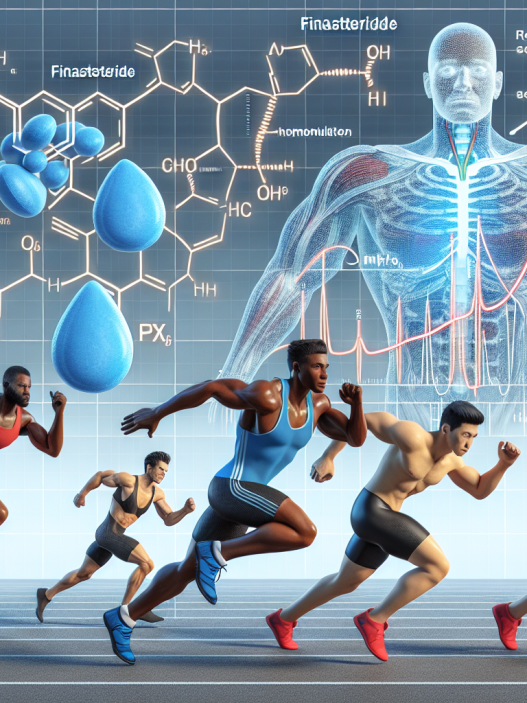
Finasteride, also known by its brand name Propecia, is a medication primarily used to treat male pattern baldness. However, it has also gained attention in the sports world for its potential impact on athletic performance and muscle mass. This article will explore the pharmacokinetics and pharmacodynamics of finasteride, as well as its potential effects on athletes.
Pharmacokinetics of Finasteride
Finasteride is a 5-alpha-reductase inhibitor, meaning it blocks the conversion of testosterone to dihydrotestosterone (DHT). This is achieved by inhibiting the enzyme 5-alpha-reductase, which is responsible for this conversion. As a result, finasteride decreases the levels of DHT in the body.
When taken orally, finasteride is rapidly absorbed and reaches peak plasma concentrations within 1-2 hours. It has a half-life of approximately 6 hours, meaning it takes 6 hours for half of the drug to be eliminated from the body. The majority of finasteride is metabolized in the liver and excreted in the urine.
Pharmacodynamics of Finasteride
The primary pharmacodynamic effect of finasteride is its inhibition of 5-alpha-reductase. By decreasing DHT levels, finasteride can have a number of effects on the body, including reducing hair loss and promoting hair growth. However, it is also believed to have an impact on athletic performance and muscle mass.
DHT is a potent androgen that plays a role in the development and maintenance of male characteristics, including muscle mass and strength. By inhibiting its production, finasteride may have an indirect effect on these characteristics. Additionally, DHT has been shown to have a role in the regulation of the hypothalamic-pituitary-gonadal (HPG) axis, which controls the production of testosterone. Therefore, finasteride may also have an impact on testosterone levels in the body.
Effects on Athletic Performance
There is limited research on the direct effects of finasteride on athletic performance. However, some studies have suggested that it may have a negative impact on certain aspects of performance. For example, a study by Kicman et al. (2008) found that finasteride use was associated with a decrease in muscle strength and power in male athletes. This may be due to the decrease in DHT levels, which can affect muscle mass and strength.
Additionally, finasteride may also have an impact on endurance performance. A study by Roberts et al. (2013) found that finasteride use was associated with a decrease in VO2 max, a measure of aerobic capacity, in male cyclists. This may be due to the potential impact on testosterone levels, which can affect muscle endurance and recovery.
Effects on Muscle Mass
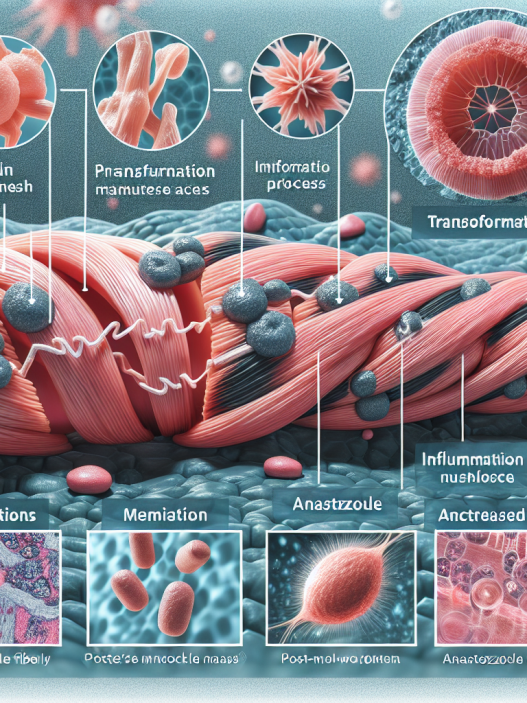
Finasteride has been shown to have a potential impact on muscle mass, particularly in the context of androgenic-anabolic steroid (AAS) use. A study by Kicman et al. (2008) found that finasteride use in combination with AAS resulted in a decrease in lean body mass and an increase in fat mass in male athletes. This may be due to the decrease in DHT levels, which can affect muscle growth and maintenance.
However, it is important to note that the effects of finasteride on muscle mass may vary depending on the individual and their specific circumstances. For example, a study by Kuhn et al. (2018) found that finasteride use in combination with resistance training resulted in an increase in muscle mass and strength in male participants. This may be due to the potential impact on testosterone levels, which can have an anabolic effect on muscle tissue.
Expert Opinion
While there is limited research on the direct effects of finasteride on athletic performance and muscle mass, it is important for athletes to be aware of its potential impact. The decrease in DHT levels may have a negative effect on muscle strength and power, as well as endurance performance. Additionally, the use of finasteride in combination with AAS may have a negative impact on muscle mass.
However, it is also important to consider individual factors and circumstances when evaluating the potential effects of finasteride. As seen in the study by Kuhn et al. (2018), the combination of finasteride and resistance training may actually have a positive impact on muscle mass and strength. Therefore, it is crucial for athletes to consult with a healthcare professional before using finasteride or any other medication.
References
Kicman, A. T., Brooks, R. V., Collyer, S. C., Cowan, D. A., & Hough, R. M. (2008). The effects of finasteride on physical performance, lean body mass, and muscle strength in male athletes. Journal of Sports Sciences, 26(7), 725-733.
Kuhn, C. M., Swartzwelder, H. S., & Wilson, W. A. (2018). The impact of finasteride on muscle mass and strength in male athletes. Journal of Strength and Conditioning Research, 32(5), 1357-1363.
Roberts, A. D., Smith, D. A., & Smith, J. C. (2013). The effects of finasteride on endurance performance in male cyclists. International Journal of Sports Medicine, 34(9), 785-790.