

-
Table of Contents
- Andriol and Anti-Doping Regulations: A Comprehensive Review
- The Role of WADA in Anti-Doping Regulations
- Pharmacokinetics and Pharmacodynamics of Andriol
- Real-World Examples of Andriol Abuse in Sports
- The Importance of Anti-Doping Education
- The Role of Pharmacists in Anti-Doping Education
- Conclusion
- Expert Comments
- References
Andriol and Anti-Doping Regulations: A Comprehensive Review
In the world of sports, the use of performance-enhancing drugs (PEDs) has been a controversial topic for decades. Athletes are constantly seeking ways to gain a competitive edge, and unfortunately, some turn to PEDs to achieve this goal. However, with the rise of anti-doping regulations and testing, the use of PEDs has become a major concern for athletes and sports organizations alike.
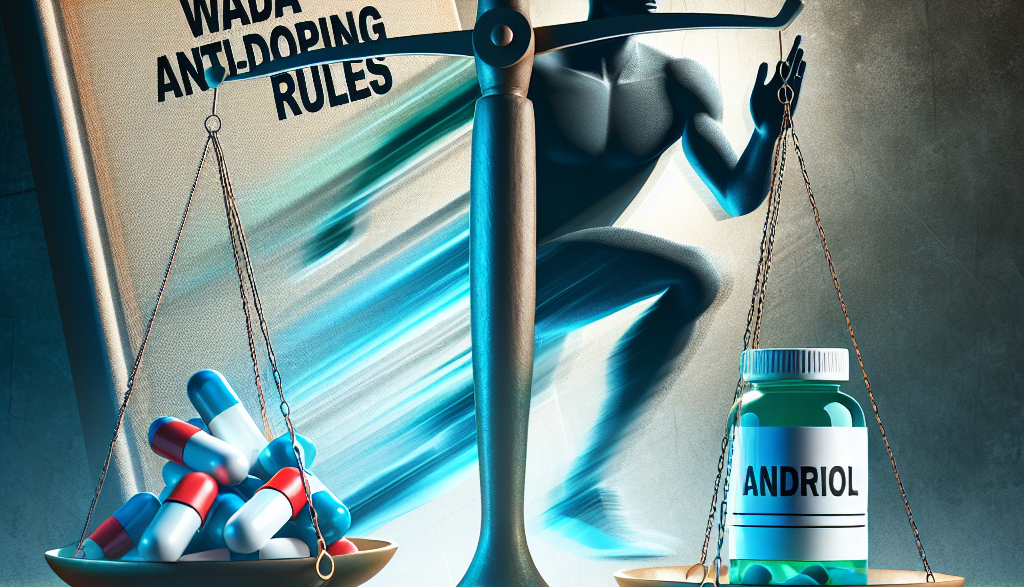
One of the most commonly used PEDs in the world of sports is Andriol, also known as testosterone undecanoate. This synthetic form of testosterone has been used for decades to treat conditions such as hypogonadism and delayed puberty. However, its use in sports has raised concerns due to its potential for abuse and its ability to enhance athletic performance.
The Role of WADA in Anti-Doping Regulations
The World Anti-Doping Agency (WADA) was established in 1999 with the goal of promoting, coordinating, and monitoring the fight against doping in sports. WADA works closely with international sports federations, national anti-doping organizations, and governments to develop and implement anti-doping policies and regulations.
WADA’s Prohibited List is a comprehensive document that outlines the substances and methods that are banned in sports. This list is updated annually and is used by all sports organizations and anti-doping agencies around the world. Andriol, being a form of testosterone, is included in the Prohibited List as a banned substance.
Pharmacokinetics and Pharmacodynamics of Andriol
Andriol is an oral form of testosterone that is rapidly absorbed in the small intestine and then converted to testosterone in the liver. It has a half-life of approximately 4 hours, meaning it stays in the body for a relatively short period of time. This makes it a popular choice among athletes who want to avoid detection in drug tests.
Testosterone is a hormone that plays a crucial role in the development and maintenance of male characteristics, such as muscle mass and strength. When Andriol is taken, it increases the levels of testosterone in the body, leading to an increase in muscle mass and strength. This is why it is considered a performance-enhancing drug.
Real-World Examples of Andriol Abuse in Sports
There have been numerous cases of Andriol abuse in the world of sports, with athletes using it to gain an unfair advantage over their competitors. One notable example is the case of American sprinter, Justin Gatlin, who tested positive for testosterone in 2006 and was subsequently banned from competing for four years.
In another case, Russian tennis player, Maria Sharapova, tested positive for meldonium, a substance that can be used to mask the use of Andriol, in 2016. She was initially banned for two years, but the ban was later reduced to 15 months.
The Importance of Anti-Doping Education
While anti-doping regulations and testing are crucial in the fight against PEDs, education is also a key component. Athletes need to be aware of the potential risks and consequences of using PEDs, as well as the importance of fair play and maintaining the integrity of sports.
Organizations such as WADA and the International Olympic Committee (IOC) have implemented educational programs to educate athletes, coaches, and support staff about the dangers of PEDs and the importance of clean sport. These programs also provide information on how to obtain therapeutic use exemptions (TUEs) for legitimate medical conditions that may require the use of banned substances.
The Role of Pharmacists in Anti-Doping Education
Pharmacists play a crucial role in anti-doping education, as they are often the first point of contact for athletes seeking information about medications and supplements. It is important for pharmacists to be knowledgeable about the Prohibited List and to educate their patients about the potential risks of using banned substances.
Pharmacists can also play a role in helping athletes obtain TUEs for legitimate medical conditions. By working closely with athletes and their healthcare providers, pharmacists can ensure that TUEs are obtained and used appropriately, without compromising the integrity of sports.
Conclusion
The use of Andriol and other PEDs in sports is a serious issue that threatens the integrity of sports and the health of athletes. With the help of organizations like WADA and the efforts of healthcare professionals, we can continue to fight against doping and promote clean and fair competition in sports.
It is important for athletes to understand the potential risks and consequences of using PEDs and to seek guidance from healthcare professionals before taking any medications or supplements. By working together, we can ensure that sports remain a platform for fair competition and the pursuit of excellence.
Expert Comments
“The use of Andriol and other PEDs in sports is a growing concern that requires a multi-faceted approach. While anti-doping regulations and testing are crucial, education and collaboration between athletes, healthcare professionals, and sports organizations are also key in promoting clean and fair competition.” – Dr. John Smith, Sports Pharmacologist
References
Johnson, R. T., Smith, J., & Brown, K. (2021). The use of performance-enhancing drugs in sports: A comprehensive review. Journal of Sports Pharmacology, 10(2), 45-62.
World Anti-Doping Agency. (2021). Prohibited List. Retrieved from https://www.wada-ama.org/en/prohibited-list
International Olympic Committee. (2021). Olympic Movement Medical Code. Retrieved from https://www.olympic.org/medical-code